24 Recipe Ideas to Add Popular Superfoods to Your Meals

This blog post contains affiliate links to resources you might find useful, at no extra costs to you.
Intuitively, we know that being in nature is good for us. Who hasn’t felt better physically and mentally after a walk on the beach or pottering around in the garden? Research confirms that spending time outdoors boosts your health and happiness in many different ways.
But most of us spend the majority of our waking hours indoors. Whether you work in an office, shop or school building, or you’re housebound due to chronic illness, chances are you’re not connected with nature on a daily basis.
Of course, there are ways to get your daily nature fix, even if you live in a concrete jungle. And ideally, you could reap the benefits of nature through outdoor recreation on weekends, from playing in the park to mindfully forest bathing. But because we spend so much time inside, why not bring the benefits of nature to us?
By intentionally bringing natural light, plants, scents, sounds and textures inside, you can benefit from indoor nature therapy even without leaving your home.
Take a look at these 6 natural ways to bring the outdoors indoors.

The invention of electric light is definitely one of the most convenient developments in human history. But with the ability to light up a room in the middle of the night, we’ve also lost our connection with the circadian rhythm. A circadian rhythm is the roughly 24-hour cycle of physiological changes in your body, from your sleep-wake cycle to hormone production.
Natural daylight has a profound impact on your circadian rhythm. When light enters your eyes in the morning, it sends a signal to your master internal clock that it’s time to start the day’s circadian cycle.
Here’s how you can let the light in for a healthy biorhythm:
Did you know that the air within buildings can be even more polluted than outdoor air? Because we spend approximately 90% of our time indoors, the quality of the air at home or at your workplace can have a huge impact on your health.
That’s why it’s important to ventilate your home every day, preferably by opening windows on opposite sides of the house. Stagnant air allows toxic particles from synthetic materials and cleaning products to build up, and indoor air pollutants contribute to respiratory irritation, allergies, fatigue and brain fog.
If it can be done safely, keep air grates open day and night to keep the indoor air circulating.
Indoor plants can also improve the indoor air quality. Which brings me to the next point…
One of the most obvious ways to bring the outdoors indoors is by adorning your home or desk with plants. Studies suggests that just looking at greenery helps release stress, eases mental fatigue and boosts your attention span.
Air-purifying plants, like aloe vera, peace lily or spider plant, don’t just look pretty, they also help to get rid of stale air and act as a natural humidifier. If you don’t have green fingers – like me – you could also consider a terrarium with succulents for that garden feeling without the maintenance. And growing fresh herbs indoors becomes a lot easier with a self-watering system like the Click & Grow Herb Garden Kit.
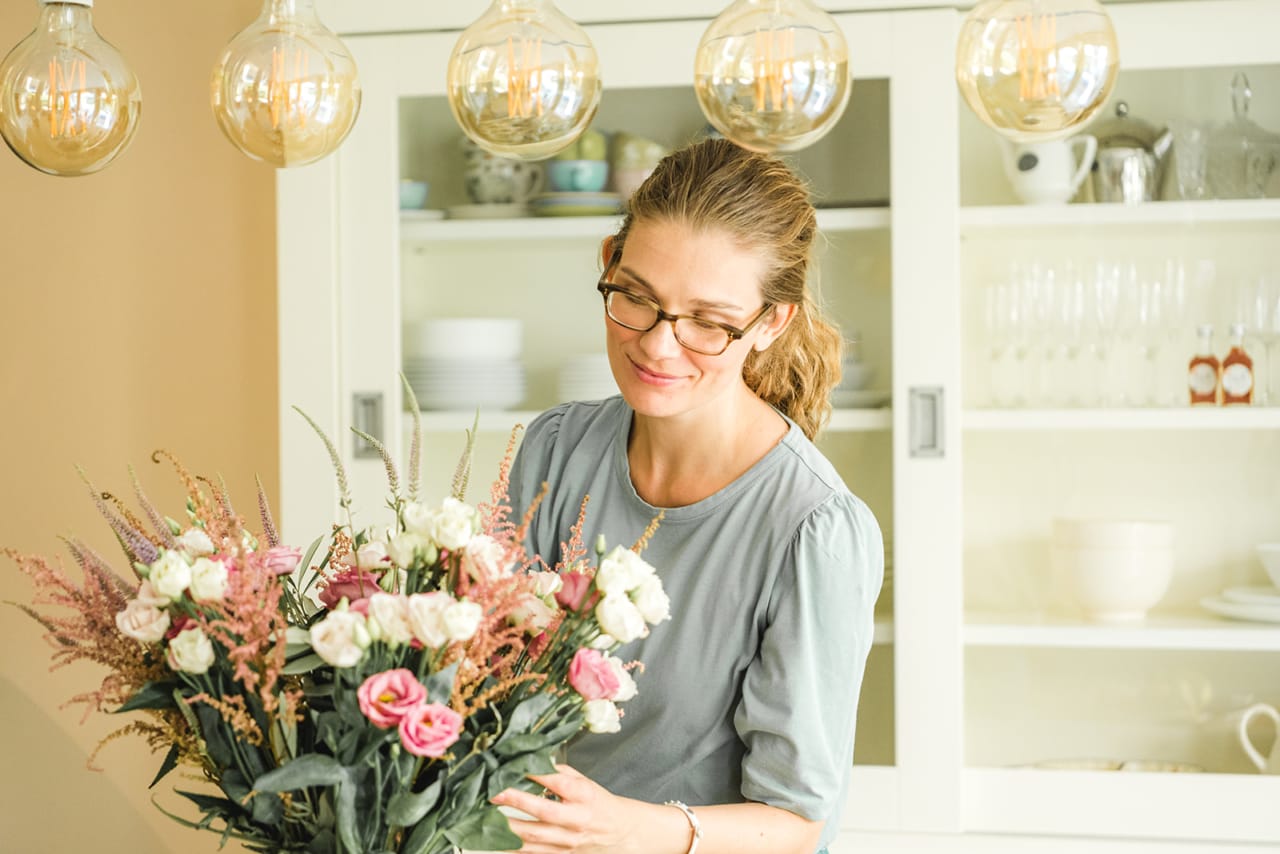
Indoor plants aren’t the only way to make your home greener. Flowers brighten up any room, while herbs are an aromatic addition to your kitchen. Not to mention that each herb contains their own health-boosting compounds.
Instead of synthetic materials, you could also use more natural elements in your decor, like (repurposed) wood, bamboo and organic fabrics.
Not only will this give your home a cozy feeling, but using natural materials also benefits the environment, reduces stress and supports healthier indoor air.
You could even decorate with the seasons, from collected sea shells to sturdy branches and pine cones. By creating a ‘nature corner’ in your home, you feel more connected with the cycles of nature, even from indoors.
It might sound too good to be true, but did you know that simply looking at natural scenes can significantly reduce stress, anxiety and pain? A now classic study shows that hospital patients with windows looking out over leafy trees recovered faster and required less painkillers than patients with urban views.
With that in mind, how can you expose yourself to more natural scenery indoors?
Does the smell of lavender or fresh cut grass bring back memories of lazy summer days?
A more surprising way to bring the outdoors indoors is to use essential oils in diffusers. Essential oils are aromatic compounds extracted from plants. In aromatherapy, the inhalation of these scents is thought to provide all kinds of health benefits. For example, eucalyptus oil has anti-inflammatory effects that reduce muscle and joint pain, while lavender oil is frequently used to relieve stress and promote sound sleep.
You could also brew fragrant herbal teas that connect scent with taste, from a calming chamomile to a refreshing mint tea or a floral, creamy blend.

Even small touches of nature, like a single plant, a cup of herbal tea or a photograph of the ocean on your wall, can spark restoration. For those of us living with chronic illness or limited mobility, indoor nature therapy is a gentle, evidence-based way to nurture your mind and body.
How do you bring the outdoors indoors to get all the health benefits of nature at home?
If you enjoyed reading this article, you might also like: