Sad & Sick? Your Mental Health Toolkit for Chronic Illness


This article contains some affiliate links to resources you may find useful, at no extra costs to you. All opinions are my own.
‘Tired’ doesn’t begin to describe what it’s like to live with chronic fatigue every day.
Far more than feeling worn-out after a busy day, chronic fatigue is a multi-system exhaustion that goes deep into your muscles, your brain and your ability to function. It’s the ‘sickly’ type of tiredness you experience when you’re down with a serious flu, but much more intense, persistent and life-altering. And sadly, getting enough sleep doesn’t make it better.
Have you ever wondered why you’re so exhausted all the time, no matter how much you rest? You’re not alone.
Chronic fatigue is a cross-cutting symptom that accompanies many chronic illnesses, from lupus, arthritis and MS to heart conditions, thyroid problems and kidney disease. It is a persistent physical, cognitive and/or emotional exhaustion, that is out of proportion for recent activity, cannot be fully relieved by rest of sleep, and significantly interferes with your daily functioning, for 6 months or more.
Even though chronic fatigue often doesn’t really show on lab results, you still feel completely wiped out after taking a shower or need days to recover from a simple outing. More than just tiredness, your muscles seem heavy, your brain struggles to process information or come up with the right word, and life just feels overwhelming.
But as necessary as sleep and resting are, they do not really restore your energy or reset your capacity. And so that pervasive exhaustion only builds up over time, making it hard (if not impossible) for you to work or go to school, clean your home, have fun with friends and take care of your family, or even yourself.
Chronic fatigue is a long-lasting and pervasive physical, cognitive and/or emotional exhaustion, that is out of proportion for recent activity, cannot be fully relieved by rest of sleep, and significantly interferes with your daily functioning.
It is important to notice that chronic fatigue is not the same as chronic fatigue syndrome, also known as ME/CFS. While being extremely tired every day is a core symptom of this illness, ME/CFS is a complex neurological condition also characterized by post-exertional malaise (a worsening of symptoms after (very) mild exertion), unrefreshing sleep and brain fog. Chronic fatigue as a symptom that accompanies many chronic conditions can be severe and disabling in itself, without meeting the diagnostic criteria for ME/CFS.
Other post-viral syndromes like long COVID, chronic Lyme and Q fever are also known to cause extreme exhaustion, but do include a wide range of other symptoms.
Although recent research is finding more and more biomarkers to diagnose chronic fatigue, involving immune responses, energy metabolism and genetic factors in ME/CFS, there is still no medical cure or easy lifestyle fix to stop feeling so tired every day.
So how exactly do you handle living with chronic fatigue day in day out? Let’s take a look at some physical, psychological and practical coping strategies.
Disclaimer: Always consult a medical professional when experiencing chronic fatigue to rule out any serious and/or treatable causes. Also ask your doctor, therapist and/or pharmacy for tailored advice before making any major lifestyle changes. The information below is meant for general educational purposes only and cannot replace face-to-face medical advice.

Countless of books, articles and programs have been written about what you can do to start getting your energy back, even with chronic illness. Science shows that lifestyle changes like improving your quality of sleep, gentle movement, spending time in nature and eating nutrient-rich meals that are low on sugar and ultra-processed foods can all help you feel more energetic.
But that is not the case for everyone, nor immediately, and not always fully. So if you are struggling with post-cancer fatigue, post-viral exhaustion or MS fatigue, how exactly do you handle being exhausted all the time?
There are no easy solutions that will work for everyone, but here are some physical, practical and psychological strategies to cope with chronic fatigue.

What can you do to support your energy levels and fight fatigue, even if you’re chronically tired?
It can be so frustrating to do everything right – eat well, do yoga, go to bed on time – and still wake up every morning feeling worn-out. And worse: you probably have to spend the little energy you do have on boring self-care tasks and managing your symptoms.
However, issues like insomnia, nutrient deficiencies and deconditioning due to bed rest will only make your chronic fatigue worse. You still need to stay hydrated and regularly eat nourishing meals, move your body gently and get some sleep. So explore strategies to practice self-care on your terms:
For more strategies, read ‘How to Work on Your Recovery from Illness in Everyday Life’ and 8 Keystone Habits to Achieve Your Recovery Goals.
Ok, you don’t want to overexert yourself, but we all have special occasions we don’t want to miss out on because of we’re too exhausted, again. So experiment with illness-proof ways you could feel a little more energetic, even if it’s just for a moment:
You can read all these tips and more in ’10 Subtle Ways to Boost Your Energy (Spoonie-Style)’.

With chronic fatigue, you’ll spend way too many hours lying in bed or relaxing on the sofa. But how well are you actually resting?
Waking up feeling unrefreshed is the hallmark of chronic fatigue, and research confirms that sleep patterns in chronic fatigue are often dysregulated. There is no easy way to fix these sleep disturbances, but it does become even more important to have you ‘bedtime basics’ covered: waking up and going to bed at roughly the same time every day and sleeping in a cool, dark bedroom with a comfortable mattress and pillow, while keeping caffeine, alcohol and blue-lit screens before bedtime at a minimum.
You should also create a relaxing evening routine that signals to your body and brain it’s time to start preparing for sleep. If you’re living with chronic illness, it can be useful to explore how you can deal with ‘painsomnia’ too, and what you can do when you lie awake at night.
Chronic fatigue probably forces you to rest during the day too, but not all rest if created equal. Laying on the couch scrolling social media sounds relaxing, but it does not recharge your body and brain as much as you’d think. Instead, do things that actually activate your body’s natural relaxation response, like taking a warm bath, doing breath work, practicing slow movement and being in nature. But even that might be too taxing if you’re chronically ill, and you might benefit more from ‘radical’ rest: lying in a quiet, dark room without any screens, music or other stimulation for 20 minutes.
When fighting fatigue, it’s not always about sleeping or resting more, but better.
Learn more about why chilling isn’t the same as real rest (and what to do instead), plus 12 simple practices that activate your relaxation response.

How can you overcome the practical obstacles of living with chronic fatigue?
Pacing isn’t just about resting when you’re tired. It’s a strategic way of planning your day trying to prevent exhaustion spikes.
You want to use the little energy you have deliberately. That’s why pacing involves balancing activity and rest so you stay within your body’s limits and avoid push-and-crash cycles, where a relatively good and active day leads to more fatigue the next day. The difficulty is that your energy levels change from day to day, even from hour to hour, and chronic illness can make it even more unpredictable.
In daily life, pacing can look like:
Over time, consistent pacing can lead to fewer or less severe crashes. You won’t necessarily get more energy, but you may get more usable energy.
Read more about managing your energy in Why Pacing Beats Push-and-Crash Cycles.
When you live with chronic fatigue, everything takes more energy than healthy people can imagine. Getting dressed, doing groceries, driving around or sending emails can all quietly drain you. That’s when buffer time becomes essential.
Buffer time is the intentional space you build around activities to account for fatigue, recovery time and unexpected events. You leave room in your schedule for traffic jams, doctor’s appointments running late, your body needing to take things slow or even sick days.
You can build in buffer time by scheduling only one important task for the day (anything extra is a bonus), leaving more time than you think for appointments and errands, taking breaks to recover after stressful or high-fussed tasks or planning reset days into your schedule.
Buffer time is not about doing less, but about protecting your plans by preventing fatigue and flare-ups afterwards, lowering stress, reducing the risk of having to cancel appointments and creating more calm and predictability.
You can find more details in ‘Buffer Time: The Missing Ingredient of Pacing with Chronic Illness’.

With constant tiredness, every decision, every extra step you have to take, every unimportant task drains your energy, but you don’t have any to spare. Simplifying your life can help you to remove friction in your daily life and save energy for what matters most to you.
Here are some ideas to get you started:
Get inspired by ’17 Practical Tips to Simplify Self-Care, Chores and Life Admin’.

When chronic fatigue makes you feel stressed and overwhelmed, what can you do to cope mentally and emotionally?
Brain fog is a distressing but often overlooked aspect of chronic fatigue. Thinking becomes hard when your mind’s clouded, words disappear mid-sentence and simple decisions become overwhelming.
One way to reduce this cognitive fatigue is to build systems that support your tired brain. You could write everything down, from to-do lists to medication schedules and questions for your next doctor’s appointment. Breaking down bigger tasks into small steps also helps to unburden your brain. Try to use one consistent place for your notes ( a notebook, an app, voice memos) so you’re not trying to remember where you stored information.
Setting up cues in your environment, like checklists, alarms or labels, can also help reduce the strain on your attention span.
Finally, when you’re overwhelmed, give yourself permission to think more slowly. When you can, pause before responding, ask for things in writing, or say “I need a moment to think.” Protecting your mental energy is just as important as protecting physical energy.
Check out ‘How to Deal with Brain Fog When Your Mind’s Clouded’ for more in-depth advice.
Chronic fatigue doesn’t just drain your body, it triggers all kinds of difficult emotions. You may grieve for the life you had, feel guilty for canceling plans with your friends again, be angry at your body for letting you down, or experience despair because the all-consuming exhaustion just won’t go away. And that’s completely normal!
Rather than trying to suppress those emotions, it can be more helpful to name what you’re feeling, without attaching any judgement. Allow your emotions to simply exist, without fixing them immediately. That’s easier said than done, I know, but it’s important to process your feelings.
Do try to be aware of common thinking mistakes that often creep up on us when you’re distressed, like always expecting the worst, taking things too personal and seeing feelings as facts. Practices like mindfulness or guided meditations can also help create a little breathing room around intense emotions.
Most of us, remember that coping well does not mean being cheerful or resilient all the time. It means accepting your current reality, adjusting expectations of yourself and others to match your abilities and offering yourself the same understanding you would give someone you love in a similar situation.
You can learn more emotional coping strategies in ‘Feeling Negative? How to Let Go of Unhelpful Thoughts‘ and ’11 Emotion-Focused Ways to Deal with Uncontrollable Stress’.
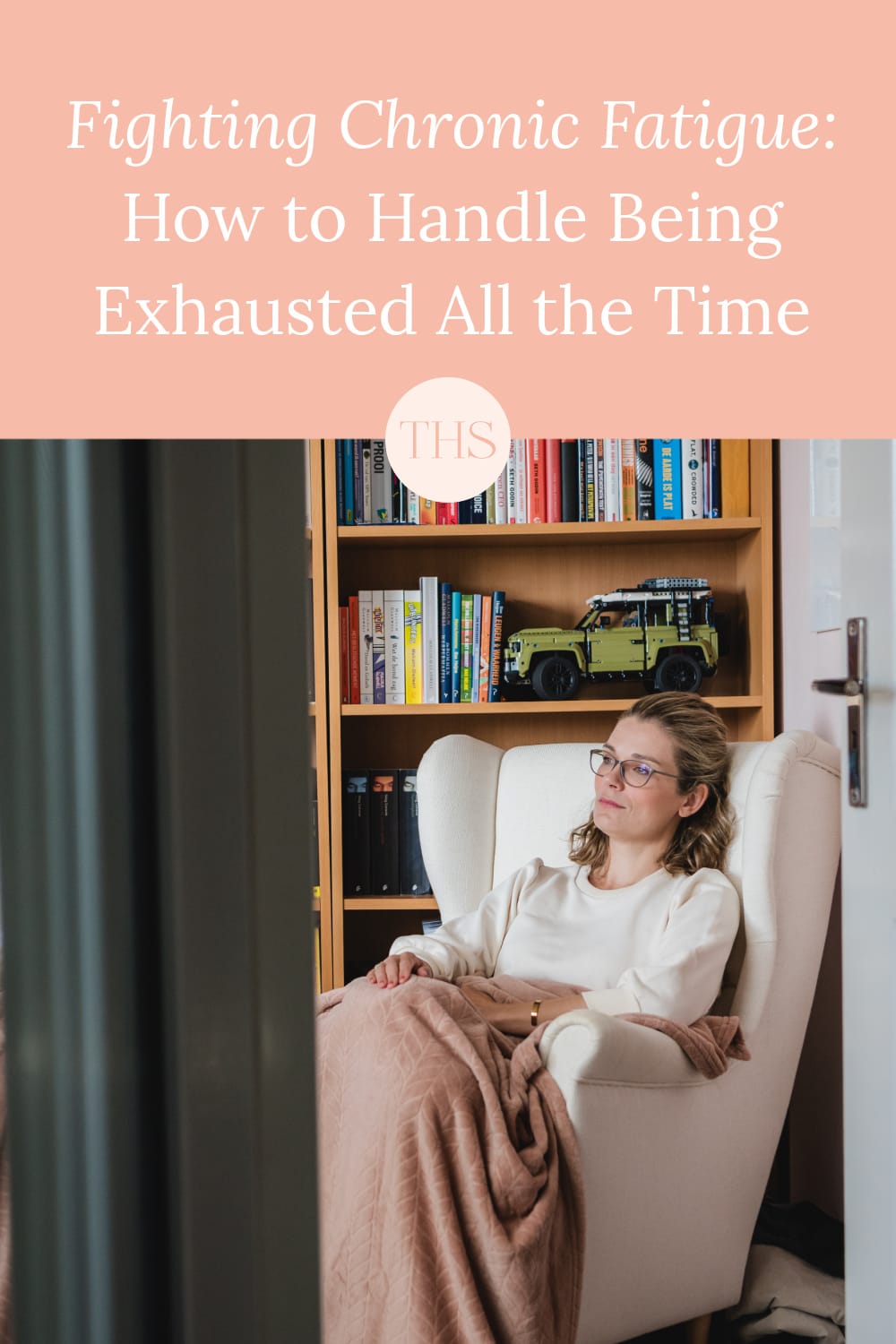
When you’re living with chronic fatigue, you have to learn to navigate a body that doesn’t work the way it did before. You can do everything right and still feel exhausted, and that can be deeply frustrating, lonely and unfair. But your fatigue is real and it’s not a ‘failure’ if you have to adapt your life around it.
Sadly, there is no single strategy that fixes chronic fatigue. But using physical, practical and psychological coping strategies like practice good self-care, managing your energy, building supportive systems and making space for difficult emotions, can make life feel a little more manageable.
And hopefully in the long run, these practices will help prevent energy crashes and flare-ups, while taking small steps towards a more stable and predictable health.
For more in-depth advice on living a good life with chronic illness, sign up for the free (bi)weekly newsletter from The Health Sessions. No spam, just accessible tips.