The Art of Savoring: 21 Ideas to Fully Enjoy Every Day

This article contains some affiliate links to products you may find useful, at no extra costs to you. All opinions are my own.
It sounds easy, right? Thinking of nothing. But anyone who’s ever tried to meditate immediately realized just how many thoughts go through our mind every minute.
It becomes even harder to meditate when your brain feels foggy, your body aches in a dozen different places, and just getting through the day already feels overwhelming. If you live with chronic illness, disability or mental health challenges, you might think, meditation just is not for me.
But meditation isn’t about having a perfectly still mind. It’s about turning inward and creating ‘mental white space’, no matter the distractions around you. Because finding calm in the chaos can be so helpful, especially when you’re chronically ill. Here’s why.
Meditation is the practice of training your awareness, often by focusing on your breathing, bodily sensations or a specific point of attention, like a candle or a mantra. It’s about calming your racing mind and learning to observe your thoughts without getting caught up in them.
Now I get it – “You should try meditation” is right up there with other well-meant but hurtful advices like “have you tried yoga/celery juice/essential oils?”, as if simply quieting your mind would fix all your health problems.
Sadly, there is no such thing as a miracle cure, but science does back up the benefits of meditation, even for people living with chronic conditions.
1. Mindfulness meditation reduces pain perception. Research shows that doing a mindfulness meditation can decrease the intensity of pain, by blocking the communication between the brain areas that process pain signals and those that produce our sense of self. This pain management strategy can improve the quality of life in people with chronic pain conditions like fibromyalgia, arthritis and migraine.
2. Meditation lowers your stress levels, by both easing psychological distress as well as decreasing your physical stress response. That leads to a lower blood pressure and heart rate, as well as lower levels of cortisol and inflammation markers.
3. Meditation eases anxiety and depression. Overview studies found that regularly practicing meditation helps to reduce symptoms of anxiety and depression, making it a valuable tool for anyone going through the emotional rollercoaster of chronic illness.
4. Meditation improves cognitive functioning. Years of meditation strengthens your brain networks, allowing your brain to process information faster. But even short meditation sessions can already improve your mental focus, working memory and other executive functions.
These benefits sound promising, but the reality is that meditating with a chronic illness comes with some unique challenges.

Many people who are seriously sick struggle with cognitive problems, like a short attention span and brain fog. You sit down to meditate, and within seconds, your mind jumps from grocery lists to medical bills to that text message you got three days ago. Even worse, sitting still makes your pain, fatigue and physical discomfort even more noticeable when there’s nothing to distract your mind.
What’s more, meditation can also bring up difficult emotions you’ve been suppressing, like frustration, grief or anxiety. When these feelings suddenly pop up, it can be overwhelming, and not at all the peaceful, meditative experience you’d be hoping for.
And if your mind refuses to center and calm down, it’s easy to think you’re ‘bad’ at meditation. That’s not true – you just have some obstacles to overcome.
Thankfully, not all meditation requires you to sit in silence for half an hour. Some beginner-friendly options include doing a mindful body scan (focusing on bodily sensations from head to toe), guided meditations (listening to a teacher or app), breathwork (conscious, rhythmic breathing), and mindfulness in motion (yoga, walking, or even washing dishes with full attention). The key is to find what feels right for you.
If you want to get started with meditation, a great question to ask yourself is: What is the goal I’m trying to reach with meditation? Do you wish to find more inner calm, would you like to improve your ability to focus or are you hoping meditation will help you cope better with physical pain? Whatever your reason is, start by zooming in on that element.
For example, let’s assume you’d love to support your mental health through meditation. Then it’s key to learn how to create space between triggers and your thoughts and feelings – how long you’re able to concentrate on your breathing or a mantra matters much less. In that case, practicing mindfulness during daily life can be just as helpful to lower your stress levels and boost your mood as long meditation sessions – and much less taxing on your foggy brain.
So how do you start meditating when you can’t focus? Let’s explore 5 gentle strategies to make mediation more accessible for people with chronic illness, disability or mental health problems.

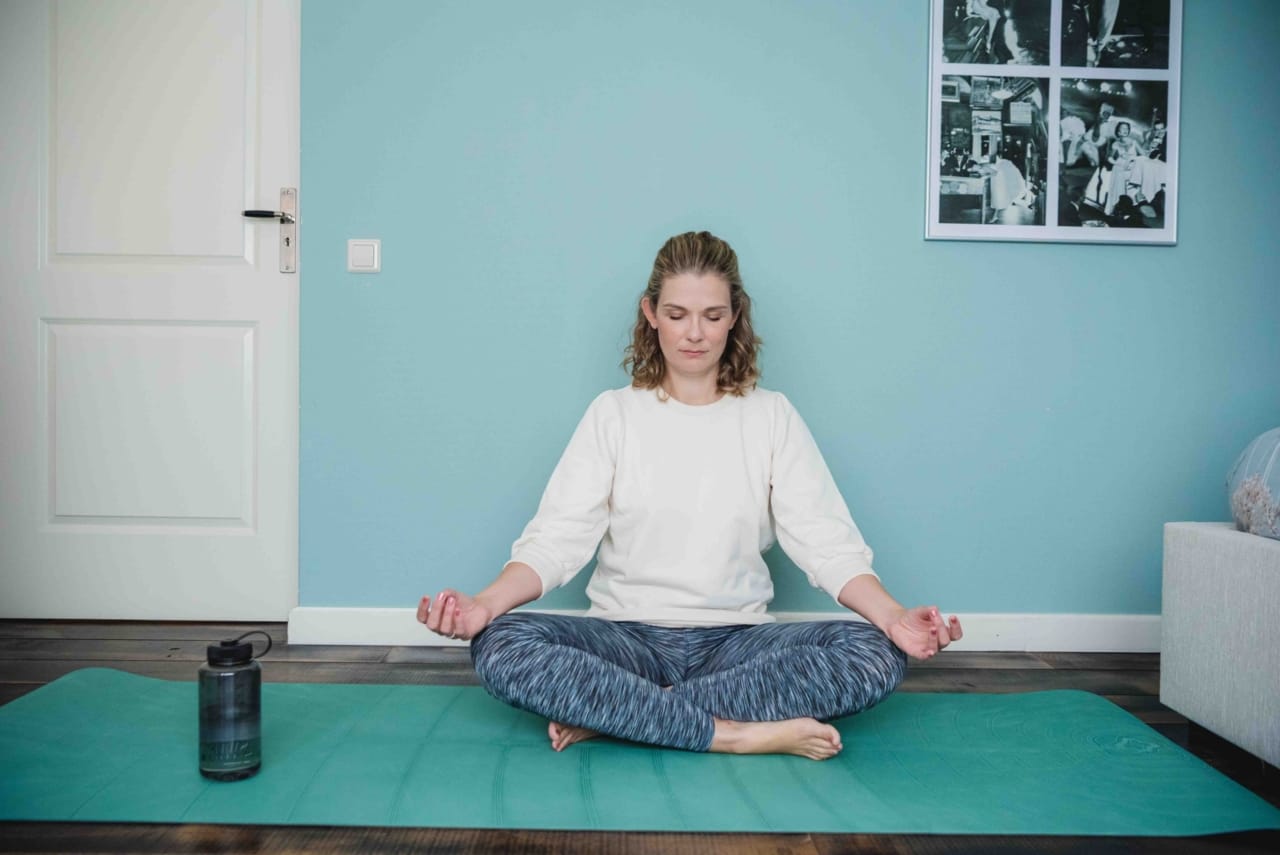
The great thing about meditation is that you don’t need any fancy tools to get started. Sure, most picturesque photos will show you people sitting cross-legged on their yoga mat dressed in athletic wear, but you could simply sit (supported) on the ground or even lie in bed if that’s what works for you.
If you’re easily distracted, engaging your body can help you stay anchored in the present moment. Instead of sitting in silence, start with meditation techniques that involve movement or tangible sensations. Here are some ideas:
Breathing forms the bridge between your body and mind, between the conscious and unconscious. When your thoughts feel scattered, bringing awareness to your breath can help you feel more centered.
There are several breathing techniques you could try that are known to calm the nervous system, like box breathing: inhaling for 4 counts, holding your breath for 4 counts, exhaling for 4 counts and then holding your breath for 4 counts again. You could also try the 4-7-8 breathing technique or do alternate nostril breathing.
Notice how the cool air enters your nose as you inhale, the way your belly rises and falls with each breath, how your muscles let go of tension as you exhale.
If you still find it hard to focus, you could repeat a simple mantra in your mind each time you breathe out, like ‘I am at peace’.

Does your mind start to wander when you sit in silence?
Guided meditations can help you to concentrate, as well as learn meditation techniques from seasoned teachers. Meditation apps like Headspace offer bite-sized meditations for any mind and any goal, from jumpstarting your day with great mental clarity to releasing stress and winding down for a good night’s sleep.
You could also try guided visualizations and imagine yourself lying down in a flowery meadow on a sunny day, watching the clouds pass by, to relax your body and mind.
Finally, repeating positive affirmations like ‘I am calm and present’ can redirect your attention whenever you have a tough time focusing.
You wouldn’t start lifting the heaviest weights in the gym without practice, yet so many of us expect to go from zero to 10 minutes of meditation in one session.
It is perfectly ok to start with 1-minute mediations – simply closing your eyes and focusing on taking a few deep breaths. You could also add some mindful micro-breaks throughout your day, during which you focus on your bodily sensations for a few moments before you brush your teeth or drink your coffee.
If that goes well, you can work your way up to 3 to 5-minute meditations, like doing a quick body scan, where you mentally travel from your toes to your head, sensing how every part of your body feels, or a loving-kindness meditation.
Which bring me to my final meditation tip…
Meditation is like exercise – the more you practice, the stronger your mental muscles will become.
Over time, you can slowly expand your ability to focus and clear your mind, by increasing your meditations in duration. Start slowly with short meditations and gradually work your way up to 10-15 minutes. Remind yourself it’s normal to have wandering thoughts – the goal isn’t to think of nothing, but to gently return to your practice whenever you get distracted.
Growing your meditation muscles is not just about being able to focus for longer, but also to explore different techniques under different circumstances. Find out ways to meditate that work best for you, whether that’s mindfulness in motion or guided meditations while you’re resting in bed. Having a wider repertoire of meditations you can turn to will be useful when you’re looking to stay calm in ever-changing situations.
Because at first, you’ll probably need to practice in a quiet room by yourself. But once you get the hang of it, you could be able to meditate anywhere, anytime. And those sound bath meditations may be very soothing at home, but when you’re stressed out during scary medical procedures, it’s nice to also know some breathing exercises or calming visualizations you can do without anyone noticing.
The key is to find meditation strategies that work for you, taking into account the obstacles you face.
If you’ve tried meditation before, but couldn’t stop your mind from wandering, you’re not the only one. But even when you have trouble focusing, you can still build a meditation practice that suits you. Whether you like to incorporate mindful movement, do breath work or use guided meditations, start small and slow, and grow your meditation muscles over time.
Meditation doesn’t have to done perfectly to bring some inner calm, clarity and awareness to your day.
Check out the Headspace app for 500+ guided mediations, breathing exercises and wind-down rituals, or learn more about the mindful body scan, the 4-7-8 breathing technique and loving-kindness meditation to help relax your body and mind.