Feeling Negative? How to Let Go of Unhelpful Thoughts

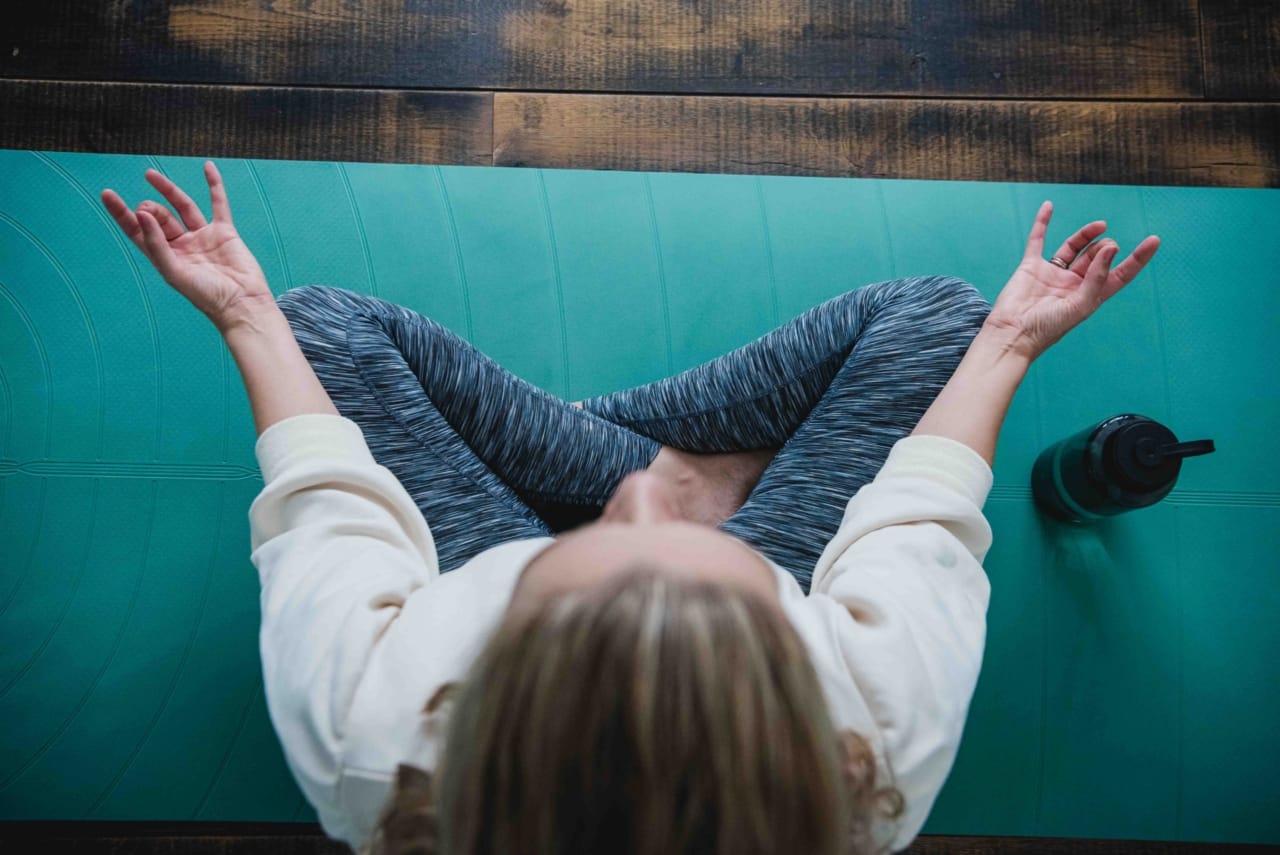
We all know that chronic stress hurts our health, big time. When your body’s stuck in fight-or-flight mode, you could get headaches, digestive issues, poor sleep, memory problems or weight gain. Even worse, feeling stressed out puts you at risk for developing heart disease, stroke, diabetes and potentially cancer.
But it’s not always easy to “just relax” when you’re struggling with serious health problems, financial troubles or strained relationships. Living with chronic illness keeps your body and brain on high alert, even if you do manage to cope well with the rollercoaster of emotions, practical obstacles and worries about the future.
Thankfully, learning to calm your nervous system is skill that you can build one step at a time, even under difficult circumstances.
Your autonomic nervous system (ANS) is the part of your nervous system that runs in the background, controlling bodily functions you never consciously think about, like your heart rate, blood pressure, digestion, breathing rate and hormone release. It has two main branches that are supposed to work like a seesaw, balancing each other out:
In a healthy body, you move fluidly between these two states: you are alert and ready for action when you need to be, but calm again once the danger’s gone. But when you’re constantly under pressure, your body gets stuck in the sympathetic mode, keeping your blood pressure up, your muscles tensed, your breathing faster. There’s less energy available for less-urgent but important bodily functions, like digestion and immunity.
Sadly, living with chronic illness comes with uncontrollable stress, upsetting events that you cannot avoid. But prolonged stress is not the only way that chronic illness can disturb your nervous system.
When you’re chronically ill, your nervous system can get thrown off balance in multiple ways:
Having a dysregulated nervous system doesn’t just feel unpleasant; it worsens your pain, fatigue and mood. A suppressed parasympathetic (rest-and-digest) system prevents the deep, restorative sleep you need to replenish cellular energy, leaving you tired but wired. Under constant stress, your brain also becomes hypersensitive to potential pain signals. These changes in neural circuits have a negative impact on your mood too. Combined with poor sleep, more pain and impaired gut health, it’s no wonder that nervous system dysregulation makes you more prone to mood swings, anxiety and depression.
The good news is, your nervous system is designed to bounce back from action mode into a restoration state. And there’s a built-in mechanism to do exactly that.
To switch off fight-or-flight mode after stressful events, your parasympathetic nervous system activates a natural relaxation response to let your heart rate, blood pressure, breathing and digestion get back to normal.
When you want to help your body return to a more restful state, you can trigger the relaxation response with 3 strategies:
Sounds easy right? And yet, this is where so many of us go ‘wrong’. Because as much as I love chilling on the couch with Netflix, it is not the same as real rest. There is a physiological difference between passive distraction (like sitting down and scrolling your phone) and actual relaxation. Zoning out in front of a screen offers a welcome break, but it doesn’t necessarily lower your heart rate, reduce muscle tension or quiet your racing thoughts.
So which practices actually do move your body from an alert sympathetic state to the restorative parasympathetic mode?
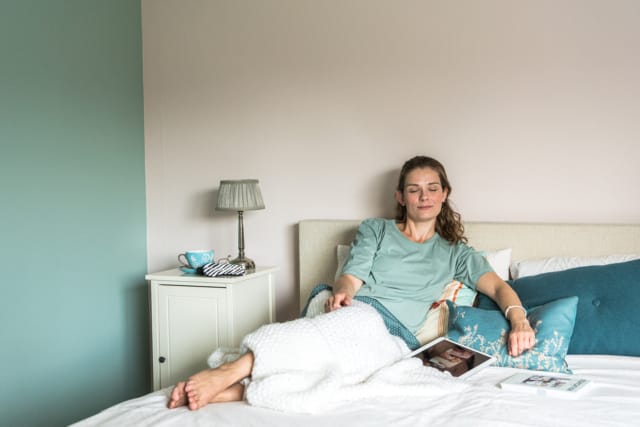
You might not realize it, but your breath is one of the most direct lines to your nervous system. Quick, shallow breathing signals to your brain that you’re under threat (whether that’s physical danger or mental distress), activating your sympathetic fight-or-flight response. Slow, deep breathing, on the other hand, is subconsciously associated with safety, letting your nervous system ease into the parasympathetic rest-and-digest state.
The great thing is, you can influence the way you breathe, even in stressful situations. It doesn’t even matter much which kind of breathing exercise you do. Research indicates that you can calm your nervous system by sitting down and focusing on extending your exhale, in whatever way works for you. For long-term stress relief, you should practice breath work regularly, for more than 5 minutes at time. It also helps to let your first breathing sessions be guided by another person, whether that’s face-to-face, via meditation apps or through video instructions.
To get you started, you could try one of these soothing breathing exercises:
All these breathing exercises encourage you to breathe out slowly, which in turn triggers the built-in relaxation response.
Get the step-by-step breathwork instructions in:
Another proven way to calm your nervous system is by releasing tension from your body. There are several accessible strategies to do that:
Slow movement like yoga, tai chi and mindful walks combines gentle exercise with deep breathing and mental awareness, perfect for activating your body’s relaxation response. Simply notice how your body feels as it moves and slow down your breathing.
If chronic illness stops you from moving your body freely, you can still let go of tension through progressive muscle relaxation. By systematically tensing and then relaxing different muscle groups, you lower your heart rate and release bodily tension. By activating the parasympathetic nervous system, progressive muscle relaxation does not only relax your body but also eases anxiety and depression in chronically ill adults.
Warm water immersion, like taking a bath, also lowers your stress levels significantly, by relaxing your muscles, reducing cortisol and improving your sleep. You could make your tub time even more calming by adding DIY herbal bath soaks with relaxing ingredients, like lavender, chamomile and epsom salt.
No matter how you release tension from your body, relaxing your muscles lowers your blood pressure, improves your blood flow and helps you to breathe more slowly.
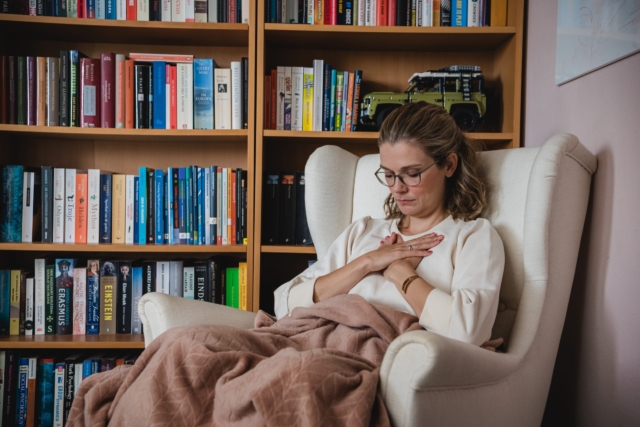
Whenever you’re stressed, it’s not just your body that needs to unwind; your brain gets overwhelmed and frazzled too. But what helps to calm your mind in challenging circumstances?
Meditation and mindfulness are powerful practice to quiet your racing thoughts. But sitting still with your eyes closed may feel impossible when you’re struggling with brain fog, chronic pain or restlessness. Thankfully, you don’t have to be in lotus pose for hours to get the benefits of meditation. You can start with 3-minute sessions, use guided meditations or add a physical anchor like prayer beads.
Mindfulness in motion like yoga or intuitive dancing will ground you in the present moment, while doing a mindful body scan helps you notice any tension you’re holding in your body, while breathing slowly.
Too tired to meditate? Mindful micro-breaks offer a great alternative for low-energy days. Drink your cup of tea with your full attention, savoring its warmth, flavors and smells. Do a walking meditation as you stroll through the park or repeat a calming mantra while you shower. Make use of the small pockets of free time in your days to quickly recharge your body and mind.
Finally, calming visualizations can help you relax mentally and physically. By picturing soothing scenarios, like lounging on a tropical island or walking in the woods, you can reduce stress and anxiety, even before surgery.
These mental strategies turn your attention away from your problems, stopping stressful thoughts to make things worse.
Learn how to do these calming practices in:
Aside from learning to calm your mind, it’s also helpful to focus on preventing mental overload. Your brain is bombarded with information and sensory input all day long, especially with modern technology connecting us to the (online) world 24/7. Most of us never stop to wonder how the podcasts we listen to, the social media feeds we scroll past, the shows we watch and the books we read actually shape our thoughts, feelings and behavior.
But when you’re feeling overwhelmed, it’s worth examining your mental diet, and how the amount and content of the information you consume on a regular basis affects your mood, thought patterns, inner beliefs about the world and the actions you take.
For more information, take a look at:
We’ve covered science-backed strategies to feel physically calmer. But a nervous system stuck in overdrive is often also fueled by your thoughts and feelings. How can you give yourself some emotional rest when you’re dealing with unpredictable symptoms and worries about the future?
The honest answer is: it’s not always possible to be at peace with your reality. It’s completely normal to be upset when your body stops working properly, you lose your job or someone you love is no longer in your life. But you can try to find some calm in the chaos, or prevent yourself from spiraling down.
We all tend to get stuck in unhelpful thoughts under stress, generalizing situations, thinking in black-and-white terms or judging ourselves harshly for human mistakes. Learning to recognize these thought patterns and gently challenging their validity is an emotional form of nervous system regulation. Because fewer threatening thoughts means less triggers for your sympathetic nervous system.
And when you’re chronically ill, you may unknowingly do something called ‘pain catastrophizing’: amplifying your physical pain by extensively worrying about your symptoms, mentally zooming in on all aspects of your pain and feeling helpless as a result. That’s not your fault: your brain is wired to focus on pain. But understanding the loop between stress and pain, as well as using tools to cope with this mental spiral, will stop you from subconsciously making the situation worse.
It takes time to adapt to uncertainty and change, and to learn how to deal with difficult emotions. But this will help you to eventually accept your chronic illness and new reality, without giving up hope for a better tomorrow.
Feeling less emotional distress is not an easy job when you’re dealing with pain, fatigue and brain fog every day, but it’s an important part of regulating your nervous system with chronic illness.
For more detailed psychological advice, check out:
When you’re already running low on energy and mental space, how can you incorporate these calming practices into your life? Building relaxing rituals that you do without giving it much thought will help you to relax your muscles, slow your breathing and quiet your mind on a regular basis:
More so, spend time in green spaces like your garden, the park or the beach as you can, to ease mental fatigue, lower your cortisol levels and boost your emotional wellbeing. Make room for rituals for restoration on a monthly basis, to stop stress from slowly building up.
Finally, it may be worth adopting a slow living mindset, by leaving space in your schedule, limiting the amount of information coming at you all day long, doing one thing with attention instead of constantly multitasking and enjoying moments of silence.
Take inspiration from these calming habits:
Living with chronic pain, inflammation and unpredictable symptoms keeps your body and brain on alert. But a dysregulated nervous system can worsen your symptoms (or add new ones), whereas the rest-and-digest state promotes healing.
That’s why it’s so important to calm your nervous system on a regular basis, by activating your body’s natural relaxation response. Extend your exhale with breathing exercises, let go of physical tension with slow movement, progressive muscle relaxation or warm water immersion, and quiet your racing thoughts with short meditations, mindful micro-breaks and soothing visualizations.
Don’t overlook your need for emotional rest: work through unhelpful thought patterns, prevent pain catastrophizing and learn healthy ways to deal with difficult feelings.
You can bring all these regulating practices together in relaxing routines, from bedtime rituals to nature time on the weekends. Because you deserve some relief from stress, pain, fatigue and overwhelm.
So choose one calming from this guide, notice how your body responds and then build from there, at whatever pace works for you.
Which practice will you try first to calm your nervous system? Explore each linked article above for the step-by-step guidance or sign up for our free weekly newsletter for more in-depth advice on living well with chronic illness: