Your Guide to Find New Meaning When Chronic Illness Turns Life Upside Down

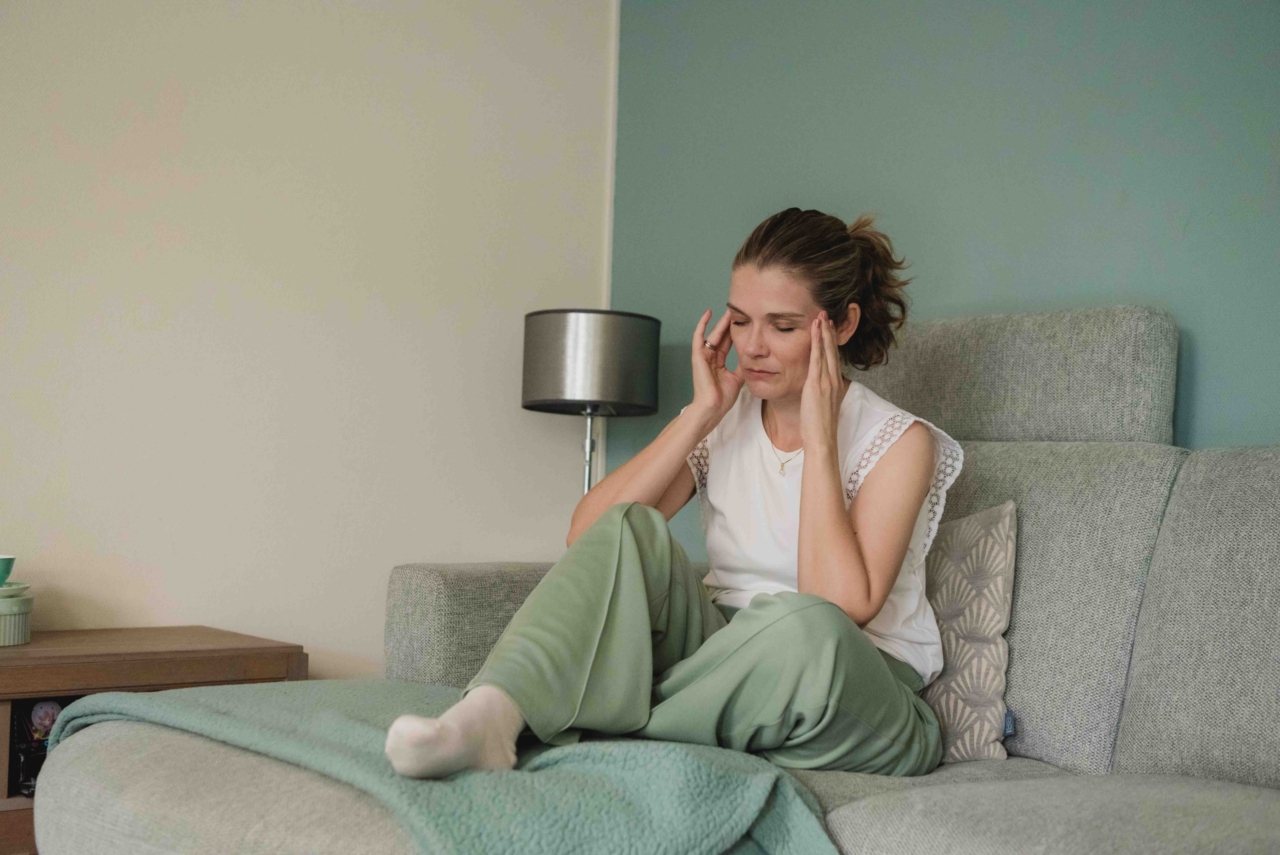
Most advice about fear or anxiety starts with the same assumption: that your reaction is disproportionate to the actual threat. If you’d challenge your thoughts about spiders, flying or work performance stress, you’d see that there’s nothing to worry about.
But when you’re living with a chronic illness, you are faced with legitimately scary symptoms, daunting medical procedures and a not-so-bright future. Your fears aren’t imaginary, they’re based on real pain and heartache.
And yet, these health-related worries can easily turn into something more serious. Reasonable vigilance can become too consuming, when you’re constantly mentally scanning for the slightest change in physical sensations. You lie awake at 3am running through the worst possible outcomes, convinced that life will never get better again. It’s not hard to see why roughly 40% of chronically ill people also suffer from an anxiety disorder.
How can you tell the difference between fear, anxiety and ‘normal’ worries?
A note before you read on: This article is not a diagnostic tool nor a substitute for professional support. If worrying about your health significantly affects your daily functioning, always reach out to your doctor or a mental health professional for help. You deserve support that goes deeper than any blog post can.
In everyday language, fear and anxiety are used interchangeably. But clinically, there’s an important distinction.
According to the American Psychological Association, fear is a short-lived response to a clearly identifiable threat you’re facing right now. Your body goes into fight-or-flight mode to deal with a specific danger, like an unleashed aggressive dog or being stuck in a confined space.
Anxiety, on the other hand, is defined as a long-lasting stress response to a diffuse threat in the (near) future, that’s characterized by muscle tension, digestive distress and avoidance behaviors. Unlike fear, anxiety doesn’t need a specific trigger and can continue even after the stressful event is over. You’re still restless, wondering ‘what if X or Y happened?’ and feeling too overwhelmed to make decisions or take action.
And then there’s a third state worth mentioning: nervousness and ‘normal’ worrying. These are mild, temporary and proportionate reactions to a stressful situation, and typically go away once your presentation or doctor’s appointment is over.
All three are normal human experiences. But all three feel different in a body and life that’s shaped by chronic illness, and that’s where things can get complicated.

What makes the standard anxiety framework so frustrating for chronically ill people is that it assumes a gap between the threat you’re perceiving and the threat that actually exists. An anxious mind keeps going over and over everything that could go wrong in the future, overestimating the actual dangers and the chances that that will happen. But when you’re living with diabetes, heart disease, COPD or Parkinson’s, you could really end up in the hospital, lose your job or get divorced.
A systematic review in PLOS ONE confirmed that health anxiety and illness-related fears are “somewhat of a different phenomenon than worries in the absence of an illness”, because patients usually report a fear of recurring or worsening of symptoms which is grounded in experience. More so, scientists do not yet have a clear agreement on “how to distinguish normal from clinical fears and concerns among people with a chronic condition.” There’s a fine line between carefully monitoring bodily sensations so you can best manage your symptoms and hypervigilance; between avoiding specific triggers of crashes and avoiding too many situations; and between mentally preparing for an uncertain future and running worst case scenarios through your mind.
Add to this the fact that with chronic illness, the threat is ongoing. Most anxiety involves worrying about situations that don’t come true. But when you’re chronically ill, something is always happening inside your body, meaning your nervous system stays on high alert. And those signals of a racing heart, tensed muscles and an upset stomach can in turn ramp up your health anxiety again.
And yet, anxiety can still become disproportionate, even when you have every reason to be scared.
Clinical health anxiety is characterized by an ongoing hypervigilance regarding your health, excessive physical self-monitoring, interpreting every physical sensation as evidence of a serious illness, constantly seeking reassurance from doctors or loved ones, and obsessively researching symptoms online. Rather than protecting you from further harm, this pattern is exhausting and self-reinforcing rather than protective.
The difficulty is that reasonable monitoring and harmful anxiety can look almost identical. Both feel necessary, both feel real. It’s also not easy to distinguish a health-related fear that requires you to take (immediate) action from a more generalized anxiety about being sick.
So how can you tell the difference between ‘normal’ worries and vigilance, fear or anxiety?

Again, this is not a diagnostic framework, just some questions you can ask yourself to get a clearer picture of what’s happening and how you could deal with that. If you are uncertain about whether you’re dealing with (clinical) anxiety, seeing a medical professional for tailored advice is always the next step to take.
Learning how to interpret bodily signals is one the hardest parts of living with chronic illness, and sadly, there’s no one-size-fits-all manual to teach you this skill. But you can start by exploring what it means to listen to your body and identifying your specific warning signs for chronic health problems.
With that in mind, here are some starting points to help you figure out whether you’re dealing with fear or anxiety:
Of course, everyone’s experience with fear, anxiety and worry are different and also depends on your personal history, your chronic illness and the sensitivity of your nervous system. But assuming the questions above helped you get a better understanding of the specific emotion you’re working with, what do you do next?
There are no general prescriptions, but here are some broad guidelines.

Usually, a specific, proportionate fear about a real symptom requires a response. Get medical help, warn a family member, ask for a second opinion in the hospital or simply stop what you’re doing and rest to prevent your pain from getting worse. Don’t talk yourself out of advocating for yourself because you’re worried about seeming dramatic or catastrophizing.
Even distinct fears about the future, like worrying about limited mobility and losing friends, can benefit from problem-solving coping, like getting mobility aids, asking for logistical help or finding accessible ways to stay connected with the people in your life.
Read more actionable tips in:
Trying to reason with anxiety or fix the situation, like you would with health-related fears, can actually make the situation worse. You keep going over possible solutions in your mind without taking action, which only intensifies your nervous systems’ alert levels, including symptoms of distress which are easily to misinterpret as potential danger. Or, maybe you do find temporary relief for one problem, but without addressing the underlying anxiety, your mind will probably worry about something else soon.
Instead, focus on calming your nervous system before trying to challenge your thoughts. That’s where relaxation techniques like breathwork, gentle movement and grounding exercises come in; not as cures, but as ways to lower your stress levels enough to re-engage your thinking brain again. Then, you can explore ways to better deal with stressful situations that are outside of your control.
You can find the step-by-step instructions here:
But when anxiety is affecting aspects of your daily life, such as your sleep, relationships or your ability to enjoy hobbies, it’s worth seeking professional support.
Worries about something real but manageable, like a change in medication or a difficult conversation with your employer, often just needs to be felt rather than fixed. Grounding yourself with movement or breathing, connecting with someone who understands you or distracting yourself in healthy ways are usually enough to deal with these feelings.
Living with chronic illness means your fears are often founded in reality, not your overactive imagination. You have every right to be vigilant about symptoms and sensations, and worry about your future. At the same time, anxiety has a way of growing beyond what’s factually true, hurting your health and happiness even more.
Being able to tell the difference between fear or anxiety is not about labeling yourself or deciding whether your feelings are valid. They are. It’s about knowing what you need to best cope with your worries when chronic illness scares you.
For more in-depth advice about living. good life with chronic illness, sign up for weekly articles from The Health Sessions, delivered to your inbox: