14 Life Story Quotes to Rock Your Next Chapter

Some mornings you wake up and you just know: this is going to be a bad day. You feel like you’ve been hit by a truck, you’re overcome by nausea as soon as you sit upright and your heart just sinks as you think: ‘I don’t want to do this again’.
Of course you deal with unpredictable symptoms all the time. But some days you’re too exhausted to carry the emotional weight of chronic illness on your shoulders. That’s not your fault: research shows that people with chronic pain experience are five times more likely to experience depression and anxiety than healthy people, because of changes in your neural pathways, stress hormones and inflammation. Those physical sensations make it even harder to stay positive, when you’re already dealing with emotional stress and worries about the future.
At the same time, daily diary studies showed that having a positive mood not only leads to less pain on the same day, but the following day too.
Because your physical health and mental wellbeing are so tightly intertwined, how you treat yourself on bad days matters.
You can adapt science-backed strategies to boost your mood to make them more accessible for high symptom days. Spending time in nature calms your nervous system, which helps reduce stress and pain, so see if you can sit on your balcony, care for one plant or watch a nature documentary from bed. Engage your five senses and focus on pleasant sensations like uplifting music, self-massage with aromatic oils or a soothing cup of tea to literally take your mind off your pain. And if you can, gently moving your body through stretching or a short walk releases feel-good chemicals that also lower your pain levels.
You could also try to break the vicious cycle of pain and stress. Self-compassion, for instance, is another powerful tool to help people with inflammatory bowel disease (IBD) and arthritis cope better with stress. When you’re sick and stressed, it’s more helpful to be kind to yourself than to grit your teeth.
But you can also be mindful of your thought patterns. Instead of spiraling down, you could remind yourself of some important truths: it’s normal to have bad days, and you will feel better again, even if it doesn’t feel like that now.
The trouble is, when you’re overwhelmed, in pain and want to hide under the covers, it can be incredibly hard to get in the right headspace to take action. After all, when you’re chronically ill, there are times when nothing you do seems to ease your symptoms or turn that bad day around.
If that’s you, take a moment to read these 10 helpful reminders for surviving a bad day.
I know well-meaning family and friends encourage you to ‘stay positive’, but who wouldn’t feel sad, frustrated or even angry at the world from time to time when you’re seriously sick day in and day out? You’re allowed to have all these feelings and you don’t have to pretend everything’s fine when it’s not.
But even if you were healthy, it’s completely normal to have bad days. You cannot go through life without experiencing heartache, grief and struggles.
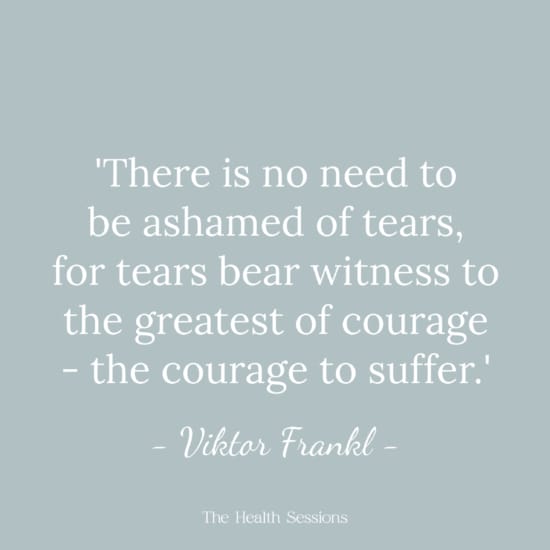
“There is no need to be ashamed of tears, for tears bear witness to the greatest of courage – the courage to suffer.” – Viktor Frankl
That doesn’t mean that it doesn’t sting when someone tells you that ‘we all have bad days‘. Because you’re dealing with so much more than waking up grumpy, being slammed with work and having an argument with your boyfriend; chronic illness affects every part of your life. You shouldn’t feel like you have to stay strong and push through the pain.
Cry or mope or grouch all you want, as long as you remember that….
Having a bad day doesn’t mean your entire life sucks, even if you’ve been having too many bad days in a row. No matter how tough life gets, you can always find tiny moments of relief, peace and contentment, maybe even love and joy.
When you’re lying sick in bed, your world becomes smaller. Nausea, breathlessness or migraine take up all your attention, making it hard to focus on anything else. So it’s no wonder that a few bad days can feel like a lifetime of feeling sick, sad and lonely. But as valid as those feelings are, there aren’t necessarily true. So don’t believe everything your mind is telling when you’re struggling.
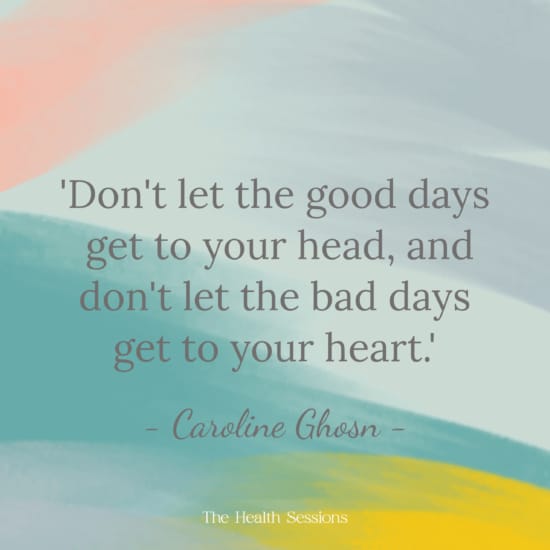
“Don’t let the good days get to your head, and don’t let the bad days get to your heart.” – Caroline Ghosn
Of course it isn’t healthy to feel stressed, down, anxious or alone more often than not. But these emotions aren’t negative in itself, they are actually important signals. Sadness, anger and envy tell you what’s wrong or missing in your life, and motivate you to change your situation.
“These pains you feel are messengers. Listen to them.” — Rumi
Painful feelings only become a problem when they stick around for too long. If you’re struggling with signs of depression or anxiety, reach out for help. But if you’re simply experiencing real FOMO, grieving your old self or worry about the future, try to see these emotions as a message from your body and brain, urging you to make changes.
Yes, your emotions can be powerful signals, but that doesn’t mean you have to start making big changes right away. Expectations like that put way too much pressure on an already bad day. And chances are, there are no quick fixes for chronic illness-related problems anyway.
You can brainstorm solutions or make an action plan if that lifts your spirits, but it’s also perfectly fine to just try to get through this day without trying to fix anything. Sometimes it takes all you have to keep breathing, sit with your feelings and manage your symptoms as well as you can.
“Sometimes carrying on, just carrying on, is the superhuman achievement.” — Albert Camus
Not all bad days are the same. Especially if you live with chronic illness, you’ll face everything from the intense crash following a fun day and acute health crises to that hollow feeling in your heart that you have nothing left to give. Listening to what your body needs is not as simple as it sounds, but it’s a crucial step to determine how you should handle bad days.
If you’re experiencing symptoms that you should not ignore, it’s clear that you should get medical help immediately and/or follow your (emergency) treatment plan. But deciding whether you should push through or stop to rest becomes trickier when you’ve got more joint pain, dizziness or digestive problems than usual, but not so much that you cannot go on. If this dilemma pops up regularly, you could make some simple rules for yourself on how you handle these high symptom days. For example, maybe you find that you can handle more fatigue and muscle weakness than usual, but fainting, migraine attacks or throwing up leads to more serious health setbacks.
“You have power over your mind, not outside events. Realize this, and you will find strength.” – Marcus Aurelius
When you struggle mostly with difficult emotions and unhelpful thoughts on bad days, it can also be difficult to sense when you should gently encourage yourself to brighten your mood and keep going, and when you need to take a mental health day. That’s a gradual process of self-reflection, but maybe these insights into self-discipline versus self-care can help you explore what’s right for you.
Whatever you choose…
You’re already struggling, so don’t be too hard on yourself. It’s all too easy to judge yourself, wish you’d have made different choices or order yourself to toughen up.
But if someone you loved would be in your shoes, what would you tell them to do? Would you call them a failure or tell them to put on a smile and push through the pain? No, you would acknowledge their harsh reality, comfort your friend or family member, and then slowly help lift their spirits again.
“Never let a bad situation bring out the worst in you.” – Unknown author
You deserve the same kindness you’d give others without hesitation. And remember, self-compassionate people choose more adaptive coping strategies that’ll help you manage stress and chronic illness better.
I know, it’s the most annoying thing to hear when your heart’s broken (and maybe your body too). Sayings like these seem to minimize your pain and how hard it will be to overcome your problems, as if you’re crying over a broken nail that’ll grow back in a week.
But still, there is some truth to these words. Because most thoughts and feelings do pass, or at least change, over time. The intensity of your emotions slowly fades, you get new insights about your situation that will affect the way you think and feel, and even persistent bodily sensations won’t be the same from day to day.
Even if your problems do not go away (hello chronic illness), you will gradually get better at handling them. Take it from someone who’s been living with chronic pain, fatigue and brain fog for decades; someday you will manage symptoms and pace your energy on autopilot, and you will find ways to live a meaningful life despite your limitations.
Because as Robert Schuller put it:
“Tough times don’t last tough people do.”
“Almost dead yesterday. Maybe dead tomorrow. But alive, gloriously alive, today.” – Robert Jordan
You don’t always have to cheer yourself up when you’re down. Life can be hard, and accepting that fact is part of being human. But if chronic illness ruins your plans more often than you’d like, looking for the things that are still going right (so called “glimmers”) helps you keep hope. More so, a positive mood can actually lower your pain levels, today and tomorrow.
Whether it’s cuddling your pet, sipping a warming drink, a comfort read that fuels your motivation or a kind message from a friend, try to notice these simple pleasures. The small positive things that happen cannot take away your pain, but they can make the big bad things in life a little easier to bear.
This is the most important reminder for bad days when you feel like you can’t go on: you have survived 100% of the difficult days in your life. You will get through today.
Because you’ve stacked up hard-earned skills on your chronic illness résumé over the months and years. Even if you’re struggling right now, you have built more resilience, patience and learned resourcefulness than you realize.
“Although the world is full of suffering, it is full also of the overcoming of it.” — Helen Keller
No need to be strong all the time, you can take the time you need to rest and recover from adversity before you bounce back. And we all need a helping hand or shoulder to cry on from time to time, so don’t be afraid to reach out for emotional support, advice or practical help whenever you need it. You don’t have to do this alone.
Yes, even with chronic illness and other problems that won’t be solved anytime soon. Your troubles won’t suddenly be gone when you wake up tomorrow, but you will have some new-found energy to tackle the day.
And that spark of optimism might lead to helpful insights and creative solutions to work around your obstacles and limitations. Embrace the spirit of ‘kaizen’, by focusing on tiny changes that will add up to meaningful improvements over time.
Accept your painful reality today, but never give up hope for a better tomorrow. Because, like Victor Hugo wrote in ‘Les Misérables’:
“Even the darkest night will end and the sun will rise.” – Victor Hugo
If you’re in the middle of a bad day right now, you don’t have to ‘do’ anything with these reminders. You don’t have to pretend that you’re fine, try to cheer yourself up or expect to feel better immediately. You don’t have to have the ‘right’ thoughts or emotions. You just have to get through today, and you’re already doing that.
Whether you need some tough love or self-care to survive bad days, treat yourself with kindness and always keep hope in your heart for a brighter tomorrow.
But when those bad days start to feel like heaviness in your body that you can’t shake, reach out to your doctor, a therapist or any medical professional that can help you manage the emotional side of living with chronic illness.
Share these important reminders for bad days with someone who might need it today.
For more in-depth advice on coping with chronic illness, check out ‘Sad and Sick? Your Mental Health Toolkit for Chronic Illness’ and ‘Hope in Times of Chronic Illness’.